-
Agricultural sprayers are among the most critical mechanization tools driving modern farming efficiency in Uganda. In a region where agriculture contributes significantly to GDP and smallholder farms dominate production systems, sprayers determine crop yield quality, pesticide efficiency, and operational scalability.
This guide provides a deep technical and operational breakdown of agricultural sprayers in Uganda, focusing on real-world applications, climate performance, regulatory compliance under UNBS standards, and integration into mechanized farming systems supplied by Jamali Tech.
What Are Agricultural Sprayers and Why They Are Essential in Uganda
Agricultural sprayers are mechanized or manual devices used to apply pesticides, herbicides, fertilizers, and crop protection chemicals in controlled quantities across farmland. In Uganda, they are essential due to high pest pressure, tropical disease cycles, and small-to-medium-scale farm structures that require precision application. They significantly improve yield efficiency while reducing chemical waste and labor dependency.
Agricultural sprayers are widely used across:
- Smallholder farms in Eastern Uganda
- Commercial plantations in Central Uganda
- Irrigation-supported farms in Northern Uganda
Jamali Tech supplies durable spraying systems integrated within its agricultural machinery division designed for high-efficiency crop management.
Farmers also combine sprayers with mechanized tools such as knapsack sprayers and power sprayers.
Top Uses of Agricultural Sprayers in Uganda
Agricultural sprayers in Uganda are primarily used for pest control, fertilizer application, herbicide distribution, and disease prevention. These applications directly improve crop survival rates and optimize farm productivity across seasonal cycles. They are essential for maintaining crop health in Uganda’s pest-prone tropical environment.
Key uses include pest control, foliar feeding, weed management, and disease prevention.
Sprayers are often deployed alongside brush cutters and rotary cultivators for full-field agricultural preparation and maintenance.
Types of Agricultural Sprayers Used in Uganda
Uganda uses knapsack sprayers, motorized power sprayers, and mist duster systems depending on farm size and crop type. Each category serves a different operational scale. Selection depends on farm acreage, crop sensitivity, and chemical application frequency.
- Knapsack sprayers for smallholder farms
- Power sprayers for medium-scale operations
- Mist blowers for greenhouse and plantation precision spraying
These systems are available within Jamali Tech’s agricultural machinery ecosystem.
Pest Control Applications in Ugandan Agriculture
Sprayers are widely used for controlling pests such as aphids, armyworms, and stem borers affecting maize, beans, coffee, and bananas. They ensure targeted chemical application and reduce crop damage significantly. Effective spraying improves food security and stabilizes yield cycles.
Spraying is critical in Eastern Uganda maize belts and Central Uganda coffee plantations.
Fertilizer Application and Nutrient Management
Agricultural sprayers enable foliar fertilizer application, allowing plants to absorb nutrients directly through leaves. This method is highly efficient in Uganda’s nutrient-depleted soils. It accelerates crop recovery compared to soil fertilization alone.
This method is widely used in coffee, tomatoes, and horticulture farming systems.
Herbicide Application and Weed Management
Sprayers are used to distribute herbicides that control invasive weeds competing with crops for nutrients. Uganda’s rainfall patterns increase weed growth intensity, making spraying essential. This reduces labor costs and improves farm efficiency.
Weed control is especially important in large mechanized farms.
Disease Prevention and Crop Protection
Sprayers apply fungicides and bactericides to prevent diseases such as coffee rust, potato blight, and banana wilt. Uganda’s humidity accelerates disease spread, making timely spraying essential. Early intervention reduces large-scale crop losses.
Climate and Terrain Performance of Sprayers in Uganda
Sprayers must operate effectively under Uganda’s humid lowlands, dusty northern regions, and high-altitude western zones. Each environment impacts spray consistency and pressure output. Proper calibration ensures uniform chemical distribution.
Altitude and humidity variations require adaptive nozzle systems and pressure regulation.
Technical Specifications of Agricultural Sprayers
Agricultural sprayers in Uganda are defined by tank capacity, pressure output, propulsion system, nozzle configuration, and durability rating. These specifications determine field efficiency, chemical usage accuracy, and operational scale. Higher specifications directly translate to improved coverage and reduced chemical waste.
Knapsack sprayers typically feature 16–20 liter tanks designed for smallholder farms, making them ideal for localized crop treatment. Their manual or battery-powered pumping systems generate moderate pressure suitable for row crops and vegetables.
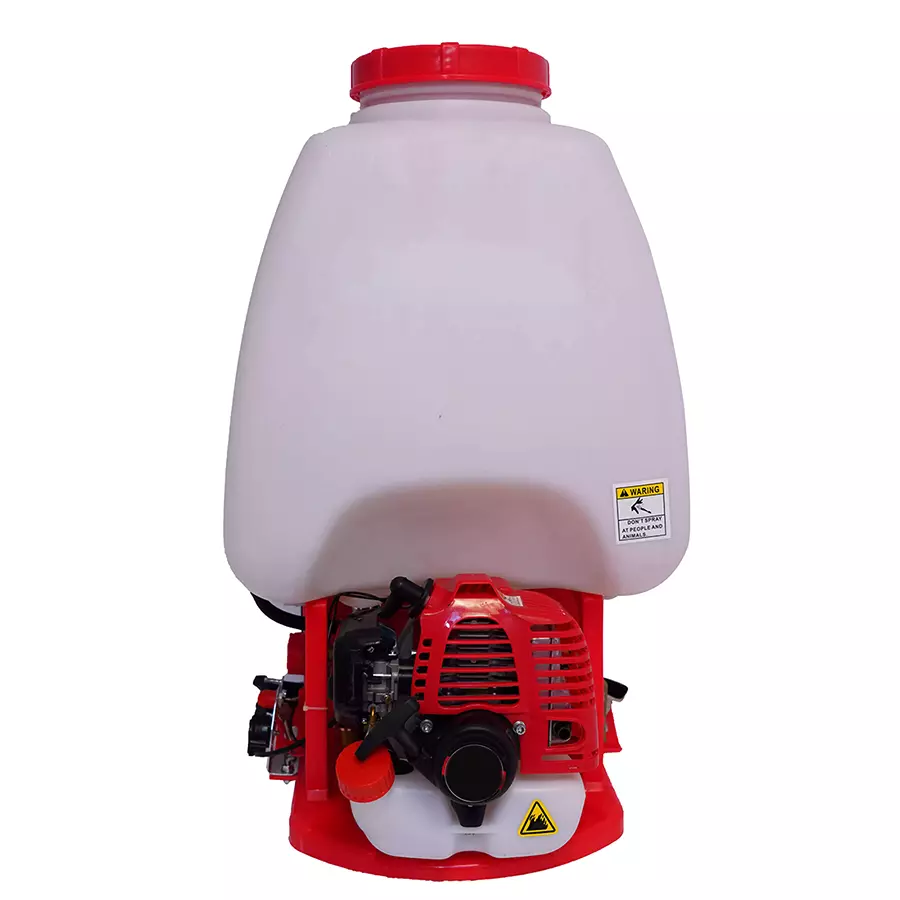
Motorized power sprayers operate with petrol or diesel engines and are designed for medium to large farms. They generate significantly higher pressure levels, allowing farmers to cover wider acreage in shorter timeframes. These systems are especially effective in commercial maize, coffee, and banana plantations.
Industrial-grade sprayers used in plantation agriculture or contract farming operations feature high-capacity tanks ranging from 100 to 500 liters. These systems use engine-driven pumps capable of sustaining continuous high-pressure output for extended spraying cycles without performance degradation.
Sprayer performance is also influenced by nozzle technology. Adjustable cone nozzles provide flexibility for both fine misting and direct stream application, while flat-fan nozzles are optimized for herbicide strip spraying. Air-assisted nozzles are increasingly used in Uganda’s horticulture sector for improved penetration into dense crop canopies.
Pressure systems vary significantly depending on application needs. Low-pressure systems are suitable for foliar feeding, while high-pressure systems are required for pest control in dense plantations. Inconsistent pressure regulation can lead to uneven chemical distribution and reduced crop protection efficiency.
Material durability is another critical specification factor. Sprayers used in Uganda must withstand exposure to agrochemicals, UV radiation, and rough field handling. High-quality polyethylene tanks and corrosion-resistant pump assemblies are standard in professional-grade equipment supplied through Jamali Tech agricultural machinery solutions.
Integration with Mechanized Farming Systems
Sprayers are most effective when integrated into broader mechanized farming systems that include irrigation, land preparation, and harvesting equipment. This improves efficiency and reduces labor dependency. Mechanization is essential for scaling agricultural productivity in Uganda.
Systems include irrigation pumps, brush cutters, and land preparation tools.
Maintenance and Safety Standards (UNBS Compliance)
Sprayers require regular maintenance of pumps, seals, and nozzles to ensure consistent pressure output. Uganda’s UNBS standards ensure safe chemical handling and operational reliability. Proper maintenance extends equipment lifespan and ensures user safety.
Routine cleaning and calibration are essential after chemical use.
Economic Impact of Agricultural Sprayers in Uganda
Agricultural sprayers increase productivity by reducing chemical waste, improving yield consistency, and lowering labor costs. They enable farmers to scale operations efficiently. They are a key driver of commercial agriculture transformation in Uganda.
They directly support income growth in rural farming communities.
Conclusion
Agricultural sprayers are indispensable tools in Uganda’s modern farming ecosystem. They enable efficient pest control, fertilizer application, and disease prevention while improving productivity and reducing operational costs.
Jamali Tech continues to support agricultural transformation across East Africa by supplying durable, UNBS-compliant spraying systems integrated into full mechanized farming solutions.
LOCALIZED CALL TO ACTION
Need Reliable Power Equipment?
Contact Jamali Tech for competitive pricing on industrial-grade generators, heavy-duty water pumps, and agricultural machinery.• Email: info@jamalitech.com
• Phone: +256 742 264 753
• Office: Kampala, Uganda
• Hours: Mon – Fri: 8:00 AM – 6:00 PM
• Get a Free Quote: https://jamalitech.com/contact/Regional Delivery Guarantee: Fast, reliable dispatch from our Kampala headquarters. Serving major regions including Mbarara, Gulu, Jinja, and Mbale, and comprehensive cross-border logistics to Nairobi.