 In Stock
Agricultural Machinery
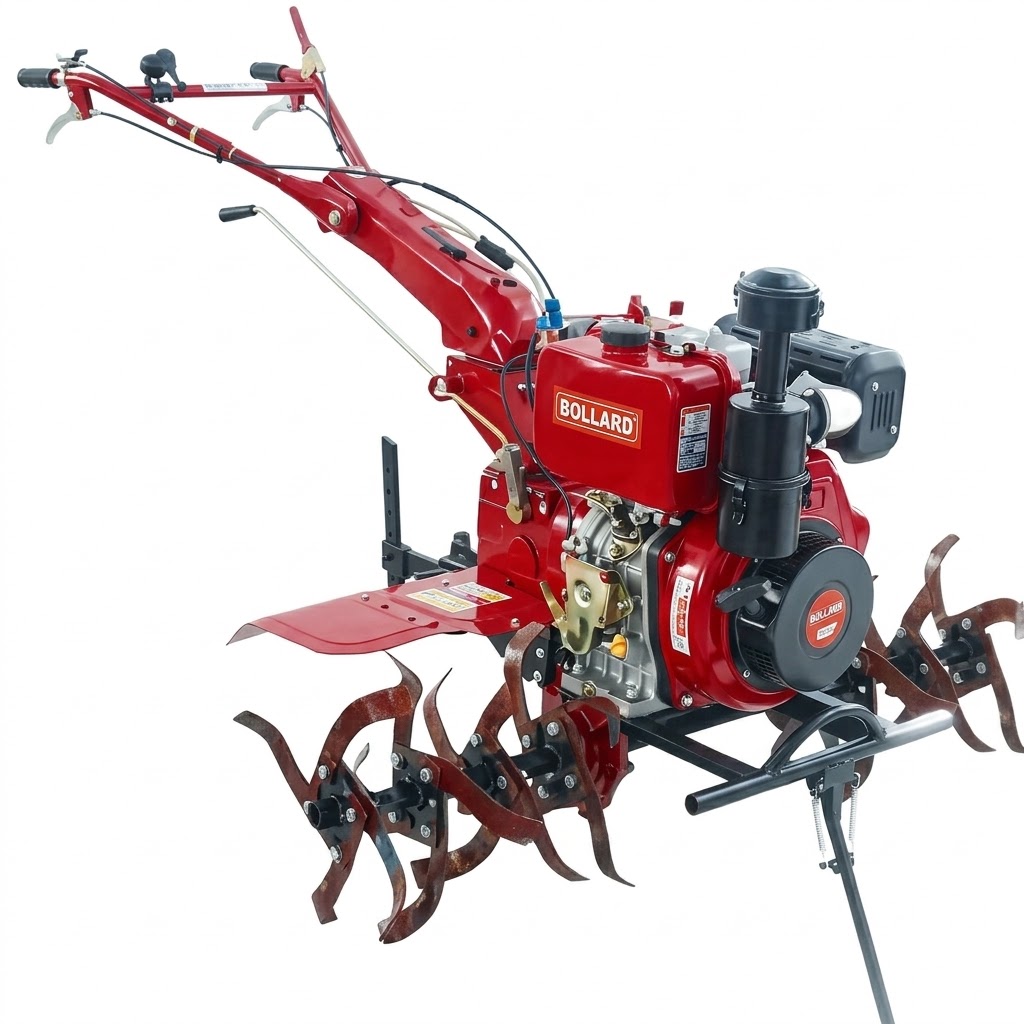
Rotary Cultivator
Quick Specs
- CategoryAgricultural Machinery
- AvailabilityIn stock — Industrial Area
- WarrantyManufacturer terms
- DeliverySame/next day in Kampala
- Genuine OEM unit
- Spare parts stocked locally
- On-site commissioning available
Overview
Jamali Tech supplies petrol-powered rotary cultivators and tillers across Uganda for soil preparation, seedbed creation, and garden cultivation. Rotary cultivators are essential for mechanized farming — they break up soil, incorporate organic matter, and create the fine tilth crops need to establish strong root systems.
Why Rotary Cultivators Matter for Ugandan Operations
Quick Takeaway: The right Rotary Cultivators can transform productivity on Ugandan farms, construction sites, and industrial workshops. Jamali Tech supplies models that are tested for durability, backed by warranty, and supported by a full inventory of genuine spare parts.
Across Kampala, Entebbe, Jinja, Mbarara, and upcountry regions, operators depend on equipment that keeps working even when conditions get tough. Dust, heavy rains, extended duty cycles, and remote off-grid locations all put pressure on machinery. Choosing Rotary Cultivators from a trusted supplier means fewer breakdowns, lower long-term costs, and predictable performance. As part of our farm mechanization catalog at Jamali Tech catalog, every unit is selected for proven reliability in East African conditions.
Typical Applications and Use Cases
Quick Takeaway: Rotary Cultivators serve a wide variety of Ugandan sectors — from commercial farming and real estate development to hospitality and light manufacturing. Our team helps you match the right model to your specific workload.
- Smallholder and commercial farm seedbed preparation
- Vegetable and horticultural soil tilling
- Greenhouse soil preparation and turnover
- Nursery and seedling bed cultivation
- Organic matter incorporation for soil improvement
- Weed control through shallow cultivation
- Garden and urban farming applications
Whether you are running a single-operator workshop or coordinating a large commercial site, picking the correct specification prevents overload and extends the useful life of the machine. The Jamali Tech team routinely advises buyers on which configuration fits their budget and duty cycle best.
Key Specifications
Quick Specification: Jamali Tech stocks multiple variants of Rotary Cultivators covering entry-level, mid-range, and heavy-duty requirements. The table below summarizes the core technical details you should consider before purchase.
| Specification | Details |
|---|---|
| Engine | 5.5HP – 9HP gasoline, 4-stroke |
| Tilling Width | 500mm – 1,000mm |
| Tilling Depth | Up to 300mm |
| Gear Box | Forward + reverse |
| Tines | Hardened steel rotating tines |
| Drive | Chain or shaft drive options |
| Wheels | Adjustable or transport wheels |
| Warranty | Manufacturer warranty included |
Exact model availability depends on current stock. If you need a specification not listed, our team can source it through our distribution partners within a short turnaround window.
Jamali Tech Ugandan Insights
Quick Takeaway: Buying equipment in Uganda is not just about price — it is about support, parts availability, and compliance. Jamali Tech combines competitive pricing with local service that keeps your operation running.
Rotary cultivators are game-changing equipment for Ugandan farmers moving from hand-hoe cultivation to mechanized farming. A single operator with a rotary cultivator prepares land 10-20 times faster than manual hoeing, transforming both the scale of farming possible and the quality of seedbed achievable. Coffee and banana farmers use rotary cultivators to maintain inter-row areas. Vegetable growers use them to turn over beds between crops and incorporate compost. For farmers building commercial operations, a rotary cultivator is often the most impactful mechanization investment possible. Our units are warrantied and supported by spare parts from Kampala.
Genuine equipment that meets UNBS (Uganda National Bureau of Standards) expectations protects your workers, your workload, and your bottom line. Cheap imports may look tempting at purchase, but the hidden costs — breakdowns, imported parts delays, unsafe operation, and lost productivity — end up being far higher than the savings. For URA tax-compliant businesses that need to demonstrate operational efficiency and proper capital equipment records, investing in documented, warrantied equipment from Jamali Tech makes bookkeeping, insurance, and audit compliance simpler.
Warranty, Delivery, and After-Sales Support
Quick Takeaway: Every Rotary Cultivators supplied by Jamali Tech comes with a manufacturer warranty, nationwide delivery, and access to genuine spare parts from our Industrial Area showroom in Kampala.
Our logistics network covers all regions of Uganda, and for larger orders we arrange secure transport directly to your site. Technical commissioning, operator training, and scheduled maintenance contracts are available on request. Bulk buyers, NGOs, and government procurement teams can contact the Jamali Tech technical team for structured pricing and tender-ready documentation. You can also learn more about Jamali Tech Uganda and see why contractors, farmers, and facility managers across the country have chosen us as their long-term equipment partner.
Many of our customers pair their Rotary Cultivators purchase with complementary equipment such as brush cutters, knapsack sprayers, water pumps, and gasoline engines, creating a complete Jamali Tech toolkit for their operations.
Frequently Asked Questions About Rotary Cultivators
What size cultivator do I need for a 1-acre farm?
For 1 acre, a 6-9HP cultivator with 700-1000mm tilling width is typical. Smaller units work for garden-scale plots.
Can I cultivate hard dry soil?
Yes, but easier results come from cultivating after rain has softened the soil. For very hard soil, make multiple passes.
Does it have reverse gear?
Yes, our rotary cultivators include forward and reverse gears for easy maneuvering in tight spaces.
Power Your Progress with Jamali Tech
Whether you are managing a large construction site, running a commercial farm, or securing backup power for your home or business, Jamali Tech delivers equipment you can rely on. We provide high-quality generators, water pumps, agricultural machinery, and professional power tools built for the tough demands of Uganda and East Africa.
Visit our showroom or speak to our technical team today for competitive pricing, reliable warranties, and expert after-sales support.
- Location: Industrial Area, Kampala, Uganda
- Call / WhatsApp: +256 742 264 753
- Email: info@jamalitech.com
- Website: /
Specifications
Technical specifications
- Engine
- Four-stroke petrol, air-cooled; size and rated power vary by model, so ask for the machine's own rating.
- Working width
- About 230 mm on a garden micro tiller, up to about 800 mm on a walk-behind.
- Working depth
- About 200 mm on a micro tiller, up to about 320 mm on a walk-behind; model-specific, not a class constant.
- Weight
- About 13 kg for a micro tiller, around 60 kg for a walk-behind; weight is what keeps tines in the soil.
- Reverse gear
- Some walk-behinds have one reverse speed; confirm the gearbox on the model quoted.
- Check before you buy
- Some machines are quoted without tines fitted; confirm tines, gearbox and tank on the actual unit.
Figures given as ranges cover the models JamaliTech stocks in this class. Confirm the exact unit against your application before ordering.
Applications
What it is used for
JamaliTech supplies walk-behind rotary cultivators in Uganda from Industrial Area, Kampala. A walk-behind suits vegetable beds and plots up to about an acre worked repeatedly, with working widths running from roughly 230 mm on a garden micro tiller to about 800 mm on a full walk-behind. Power, width and depth are model-specific, so we quote the figures for the actual machine, and we will tell you plainly when dry black cotton soil needs a tractor instead.
- Seedbed preparation for maize, beans and groundnuts on smallholder plots in Masaka, Iganga and Mbale ahead of the March-May and September-November rains.
- Vegetable and horticultural beds - tomatoes, onions, cabbage, sukuma - across the peri-urban belt around Kampala, Mukono and Wakiso.
- Greenhouse and nursery bed turning, where a narrow micro tiller fits between structures a tractor cannot enter.
- Working compost, manure and crop residue into the topsoil between seasons.
- Inter-row weeding and shallow cultivation in young coffee and banana.
- Turning school, institutional and demonstration garden plots where hiring a tractor is not economic.
Questions buyers ask
What size cultivator do I need for one acre?
For an acre worked repeatedly you want a walk-behind machine with a working width up to roughly 800 mm, not a garden micro tiller at around 230 mm. Be careful with horsepower claims: sellers often quote a headline figure well above the engine's rated output, so ask for the manufacturer's rated kW alongside the engine size. Match the width to how much ground you turn in a season and the weight to how hard your soil is.
Will it break black cotton soil?
Not when that soil is dry, and no walk-behind tiller in this class will. Black cotton sets like concrete in the dry season and cracks rather than crumbles, so forcing a walk-behind into it bounces the machine, bends tines and wrecks gearboxes. Work it a few days after good rain when it is damp but not sticky, take shallow passes and build depth over two or three runs. For genuine first breaking of dry vertisol, a tractor-drawn implement is the right tool.
Does it have reverse, and does that matter?
Reverse is the feature buyers most often overlook. In a wet Ugandan seedbed a tiller digs itself in, and with reverse you back it out under power instead of lifting sixty-odd kilos of machine out of mud by hand. Not every machine in this class has it, so confirm the gearbox on the specific model you are quoted.
Related Products