The Real Cost Decision Behind Every Small Construction Project
For small-scale developers in Uganda—particularly those constructing 3–6 unit residential apartments—the decision to buy or rent a concrete mixer is not a minor logistical choice. It directly affects project timelines, labor efficiency, concrete quality, and overall cost control.
In Kampala’s construction environment, where labor is semi-skilled and material costs fluctuate, relying on manual mixing or poorly timed equipment rental can result in:
- Inconsistent concrete strength
- Delays due to equipment unavailability
- Increased labor costs
Concrete mixers eliminate variability and improve batching accuracy. However, the financial viability of owning versus renting depends on project duration, frequency of use, and logistical efficiency.
To evaluate available machinery options, explore the full range of construction equipment through the Power Tools and Agricultural Machinery sections.
What Is the Role of a Concrete Mixer in Small-Scale Construction?
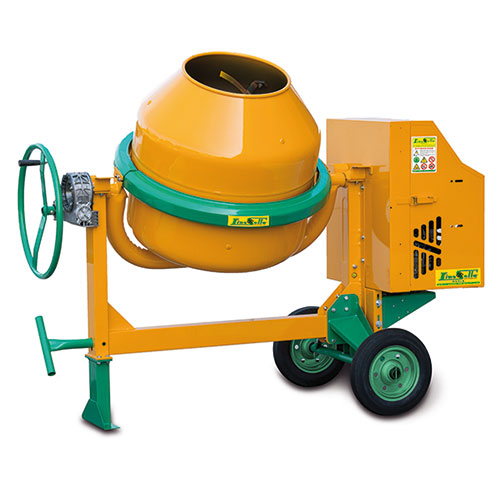
A concrete mixer ensures consistent, high-quality concrete by mechanically combining cement, aggregates, and water, significantly improving structural integrity and reducing labor inefficiencies compared to manual mixing.
In a 4-unit apartment project, mixers are primarily used for:
- Foundation works
- Slab casting
- Column and beam construction
- Plastering support
Why Manual Mixing Fails at Scale
Manual mixing introduces:
- Uneven cement distribution
- Incorrect water ratios
- Reduced compressive strength
This leads to long-term structural risks, particularly in load-bearing elements.
For complementary site tools like vibration equipment, review Concrete Vibrators, which ensure proper compaction after mixing.
What Are the Typical Types of Concrete Mixers Available in Uganda?
Concrete mixers in Uganda are typically categorized into portable drum mixers, diesel-powered mixers, and electric mixers, each suited for different site conditions and project scales.
Common Types
- Portable Drum Mixers
- Ideal for small projects
- Easy to transport
- Common in urban builds
- Diesel-Powered Mixers
- Suitable for off-grid sites
- Reliable in areas without electricity
- Higher fuel costs
- Electric Mixers
- Lower operating cost
- Require stable power supply
- Best for urban Kampala sites
To support site power needs, consider pairing electric mixers with reliable Diesel Generators.
Buying vs Renting: Which Option Is Financially Better?
Buying a concrete mixer is more cost-effective for projects lasting more than 6–8 weeks or for developers handling multiple builds, while renting is suitable for short-term or one-off projects with limited usage.
This decision depends on three key variables:
- Project duration
- Frequency of use
- Equipment availability
Financial Breakdown for a 4-Unit Apartment Project
For a typical 4-unit apartment in Kampala, buying a concrete mixer can reduce total construction costs by 15–25% compared to repeated rentals, especially when factoring in delays and labor inefficiencies.
Project Assumptions
- Duration: 4–6 months
- Mixer usage: 3–4 days per week
- Rental rate: UGX 70,000 – 120,000 per day
- Purchase cost: UGX 2.5M – 5M (depending on capacity)
Cost Comparison Table
| Cost Factor | Renting (UGX) | Buying (UGX) |
|---|---|---|
| Daily Rate | 70,000 – 120,000 | N/A |
| Monthly Usage (12 days) | 840,000 – 1,440,000 | N/A |
| 4-Month Total | 3.36M – 5.76M | 2.5M – 5M (one-time) |
| Maintenance | Included | 100K – 300K |
| Fuel / Power | Paid by user | Paid by user |
| Availability Risk | High | None |
| Long-Term Value | None | Resale or reuse |
Key Insight
If your project exceeds 30–40 working days of mixer usage, ownership becomes financially advantageous.
What Are the Hidden Costs of Renting?
Renting a concrete mixer often involves hidden costs such as transport fees, downtime penalties, availability delays, and inconsistent equipment quality.
Common Hidden Costs
- Transport charges (delivery and pickup)
- Idle labor during delays
- Equipment breakdowns
- Limited access during peak construction seasons
These factors can increase total project cost by up to 20% beyond rental fees.
What Are the Long-Term Benefits of Buying a Concrete Mixer?
Buying a concrete mixer provides full operational control, eliminates scheduling delays, and allows reuse across multiple projects, significantly improving return on investment.
Key Advantages
1. Full Control
- Use anytime without scheduling conflicts
- No dependency on rental suppliers
2. Cost Recovery
- Equipment can be reused or resold
- ROI improves with each additional project
3. Improved Efficiency
- Continuous workflow
- Reduced downtime
How Do East African Conditions Affect Mixer Performance?
Direct Answer: High temperatures, dust, and inconsistent power supply in East Africa require durable mixers with strong engines, reliable cooling systems, and proper maintenance protocols.
Environmental Factors
1. Heat and Dust
- Accelerates engine wear
- Requires regular filter cleaning
2. Power Instability
- Affects electric mixers
- Backup generators recommended
3. Site Terrain
- Uneven ground affects mixer stability
- Requires reinforced frames
For supporting equipment like land clearing tools, explore Brush Cutters.
Technical Specifications of Typical Concrete Mixers
Direct Answer: Concrete mixers vary in capacity, engine type, and output efficiency, with most small-scale construction units ranging between 120L and 400L drum capacity.
Specification Table
| Specification | Small Mixer | Medium Mixer | Large Mixer |
|---|---|---|---|
| Drum Capacity | 120–180 Litres | 200–300 Litres | 350–400 Litres |
| Engine Type | Electric/Petrol | Petrol/Diesel | Diesel |
| Power Output | 2–5 HP | 5–8 HP | 8–12 HP |
| Mixing Speed | 20–30 RPM | 20–25 RPM | 18–22 RPM |
| Output per Hour | 1–2 m³ | 2–4 m³ | 4–6 m³ |
| Weight | 100–250 kg | 250–400 kg | 400–700 kg |
When Does Renting Make More Sense?
Renting is ideal for very short projects, one-time builds, or when capital is limited and equipment usage is below 20–25 days.
Ideal Scenarios for Renting
- Small residential builds
- Short-term renovations
- Limited budget projects
However, for developers planning multiple builds, renting becomes inefficient.
When Should You Definitely Buy?
Direct Answer: You should buy a concrete mixer if you are a contractor, developer, or builder handling multiple projects or a single project exceeding one month of continuous mixer usage.
Strong Indicators for Buying
- Multiple ongoing projects
- Long construction timelines
- Frequent concrete work
To explore other essential site equipment, visit the Shop / All Products section.
How to Maximize ROI After Buying a Mixer
Direct Answer: You can maximize ROI by reusing the mixer across projects, renting it out to other contractors, and maintaining it properly to extend lifespan.
ROI Strategies
- Lease to nearby sites when idle
- Maintain regularly to avoid breakdowns
- Use across multiple builds
Supporting Equipment for Efficient Concrete Work
Direct Answer: Concrete mixing efficiency improves significantly when combined with complementary tools such as vibrators, generators, and water pumps.
Recommended Pairings
- Concrete Vibrators – for compaction
- Water Pumps – for water supply
- Generators – for power backup
Final Verdict: Buying vs Renting
Direct Answer: For a 4-unit apartment project in Kampala, buying a concrete mixer is generally the more cost-effective and operationally efficient choice, especially when project duration exceeds one month.
Summary
- Renting = Lower upfront cost, higher long-term expense
- Buying = Higher upfront cost, lower total cost over time
The decision ultimately depends on your:
- Project scale
- Budget
- Future construction plans
Need Reliable Power Equipment?
Contact Jamali Tech for competitive pricing on industrial-grade generators, heavy-duty water pumps, and agricultural machinery.
• Email: info@jamalitech.com
• Phone: +256 742 264 753
• Office: Kampala, Uganda
• Hours: Mon - Fri: 8:00 AM - 6:00 PM
• Get a Free Quote: Request a Quote
Regional Delivery Guarantee: Fast, reliable dispatch from our Kampala headquarters. Serving major regions including Gulu, Mbarara, Jinja, and comprehensive cross-border logistics to Kigali.
Ready to spec your equipment?
Tell us your job and we’ll come back with a sized quote, delivery window and warranty terms.