Walk-behind cultivators (mini tillers) are compact agricultural machines designed to prepare soil efficiently for planting by loosening, aerating, and mixing soil with minimal human labor. In Uganda, they are rapidly replacing manual hand-hoeing in vegetable farming due to their speed, efficiency, and soil improvement capabilities.
For smallholder farmers in central Uganda, where vegetable farming is intensive and labor costs are rising, mini tillers offer a practical mechanization solution. They improve productivity while reducing dependency on seasonal labor shortages. Farmers can explore mechanized solutions under Jamali Tech’s Agricultural Machinery category or browse available tools on the Shop page.
For direct procurement or bulk farm orders, visit the Request a Quote page.
Why walk-behind cultivators are essential for vegetable farming in Uganda
Walk-behind cultivators are essential for vegetable farming in Uganda because they significantly reduce manual labor, improve soil structure, and increase planting efficiency in small and medium-sized farms. Vegetable farmers benefit from faster land preparation cycles and improved crop uniformity.
Vegetable farming in central Uganda—especially crops like tomatoes, onions, cabbage, and spinach—requires frequent soil preparation. Manual tilling is time-consuming and physically demanding, while mini tillers provide consistent soil depth and texture.
Key benefits for vegetable farmers:
- Faster land preparation cycles
- Reduced labor costs
- Improved soil aeration and fertility
- Better seed germination rates
- Increased seasonal productivity
Supporting tools such as Brush Cutters and Knapsack Sprayers further enhance farm productivity.
What is a mini tiller and how it works
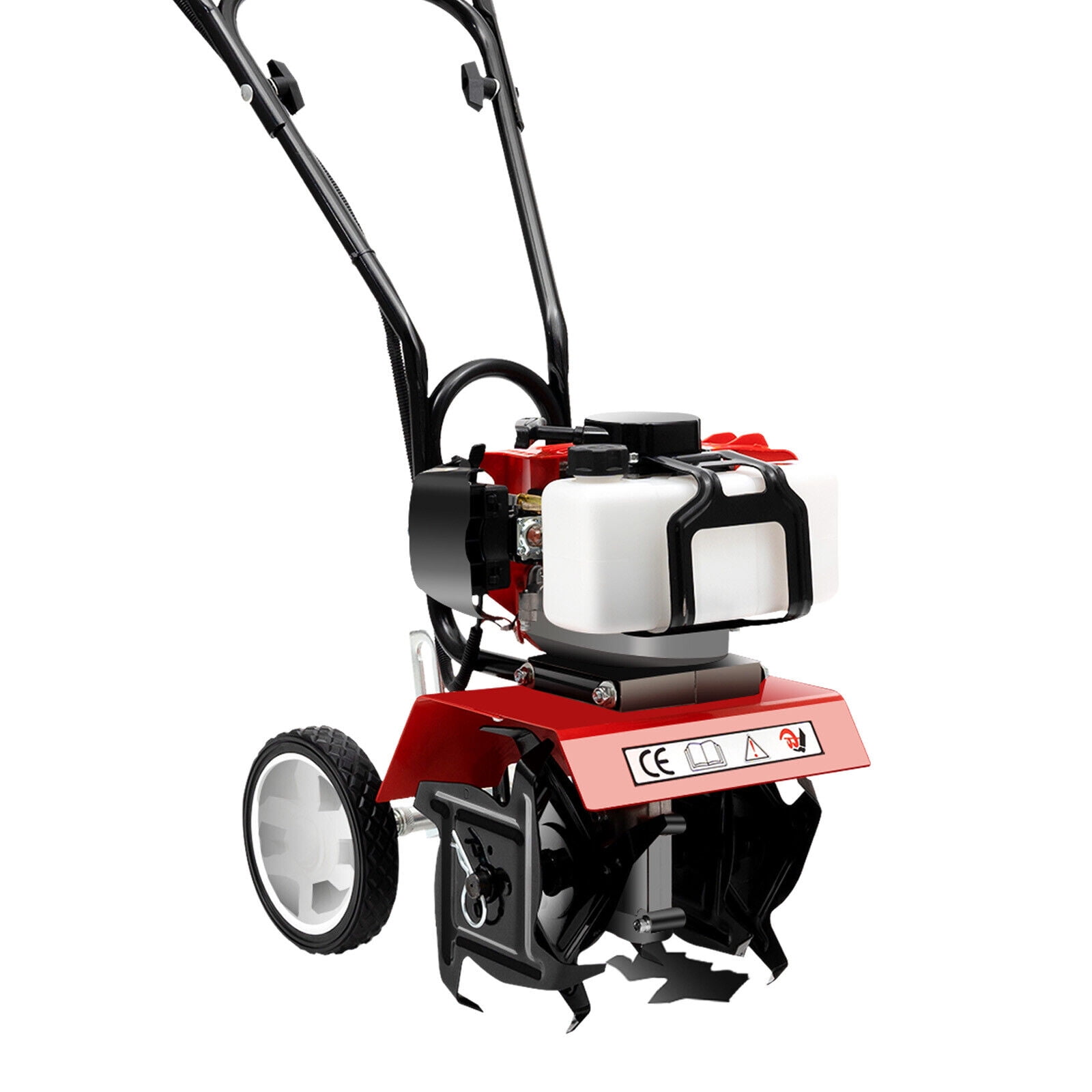
A mini tiller is a small, engine-powered agricultural machine used for soil cultivation, breaking compact soil, and preparing seedbeds in smallholder farming systems. It operates using rotating blades that dig into the soil and mix it evenly.
In Uganda, mini tillers are especially valuable for farms with limited land sizes where large tractors are impractical. They are lightweight, fuel-efficient, and easy to maneuver between vegetable rows.
Mini tillers are often powered by compact engines similar to those found in Gasoline Engines Uganda and are designed for both dry and slightly moist soil conditions.
Technical specifications of walk-behind cultivators (mini tillers)
Walk-behind cultivators are engineered for durability, soil adaptability, and ease of use in smallholder farming environments, particularly in Uganda’s mixed soil conditions.
Mini Tiller Specifications Table
| Specification | Typical Range | Function |
|---|---|---|
| Engine Type | 4-stroke gasoline | Reliable farm operation |
| Power Output | 5HP – 13HP | Small to medium farm use |
| Working Width | 30cm – 100cm | Row and open-field farming |
| Working Depth | 10cm – 30cm | Soil loosening and aeration |
| Fuel Tank Capacity | 1L – 6L | Extended field operation |
| Transmission | Gear / Belt drive | Power efficiency control |
| Weight | 30kg – 120kg | Easy maneuverability |
These machines are supported by maintenance tools like Air Compressors BT-AC500Y and Compressors for cleaning and servicing.
Why mini tillers are ideal for smallholder farmers in central Uganda
Mini tillers are ideal for smallholder farmers in central Uganda because they match small farm sizes, reduce dependency on manual labor, and improve soil productivity under intensive vegetable farming systems.
Central Uganda has high agricultural density, meaning land parcels are small but intensively cultivated. Walk-behind cultivators provide precision soil preparation without damaging crop spacing or soil structure.
Key advantages in central Uganda:
- Suitable for small fragmented plots
- Efficient in repeated seasonal planting cycles
- Reduces dependence on hired labor
- Improves soil fertility through aeration
Farmers often integrate mini tillers with irrigation systems powered by Diesel Water Pumps for year-round vegetable production.
Soil improvement benefits of walk-behind cultivators
Walk-behind cultivators improve soil structure by breaking compact layers, increasing oxygen flow, and enhancing water absorption capacity, which is critical for vegetable farming productivity in Uganda.
Soil degradation is a growing issue in intensive farming systems. Mini tillers help restore soil balance by:
- Reducing compaction
- Enhancing microbial activity
- Improving nutrient distribution
- Increasing water retention efficiency
This results in healthier crops and higher yields per season.
Step-by-step use of a mini tiller in vegetable farming
Proper use of walk-behind cultivators ensures efficient soil preparation, reduced fuel consumption, and improved farming output in Uganda’s vegetable production systems.
Operating procedure:
- Clear field of stones and debris
- Set tilling depth according to crop type
- Start engine and allow warm-up
- Move steadily across field rows
- Overlap passes for uniform soil texture
- Repeat shallow tilling for seedbed refinement
Farm hygiene and preparation are often supported by tools such as High Pressure Cleaning Machines for equipment maintenance.
Climate and soil challenges in Uganda affecting cultivation
Uganda’s climate and soil variability significantly influence the performance of walk-behind cultivators, especially in regions with heavy clay soils or seasonal rainfall fluctuations.
In high rainfall zones:
- Soil becomes heavy and sticky
- Tilling requires higher torque engines
In dry seasons:
- Soil becomes hard and compact
- Multiple passes may be required
Mini tillers adapt well due to adjustable depth control and engine power flexibility.
Economic benefits of mini tillers for vegetable farmers
Walk-behind cultivators provide strong economic returns for smallholder farmers by reducing labor costs, increasing planting cycles, and improving vegetable yields in Uganda.
Key financial advantages:
- Lower labor expenditure per season
- Faster farm turnaround time
- Increased crop cycles per year
- Higher yield consistency
Farmers combining mechanization with tools like Chain Saws and Drills achieve broader operational efficiency across farm infrastructure development.
Buying guide: choosing the right mini tiller in Uganda
Selecting the right walk-behind cultivator depends on farm size, soil type, engine power, and frequency of use in vegetable farming systems.
Key selection factors:
- Engine horsepower (5HP–13HP recommended)
- Soil hardness and texture
- Fuel efficiency and availability
- Spare parts accessibility
- Ease of maintenance
Farmers can explore full equipment options via the Agricultural Machinery category or the Shop page.
For professional consultation, use the Contact page.
Conclusion: Why walk-behind cultivators are the future of smallholder farming
Walk-behind cultivators are transforming smallholder farming in Uganda by making soil preparation faster, cheaper, and more efficient. Mini tillers improve soil quality, reduce labor dependency, and significantly increase vegetable farming productivity.
For smallholder farmers in central Uganda, investing in mini tillers is not just modernization—it is a necessary step toward sustainable and profitable agriculture.
Need Reliable Power Equipment?
Contact Jamali Tech for competitive pricing on industrial-grade generators, heavy-duty water pumps, and agricultural machinery.
• Email: info@jamalitech.com
• Phone: +256 742 264 753
• Office: Kampala, Uganda
• Hours: Mon - Fri: 8:00 AM - 6:00 PM
• Get a Free Quote: /contact/
Regional Delivery Guarantee: Serving Mbarara, Jinja, Gulu, and cross-border logistics to Nairobi.
Ready to spec your equipment?
Tell us your job and we’ll come back with a sized quote, delivery window and warranty terms.