Why Is the Choice Between Corded and Cordless Drills Important for Contractors?
The choice between corded and cordless drills is important because it directly affects productivity, mobility, and jobsite efficiency, especially in environments with unstable or limited electricity supply.
In Uganda’s construction and installation sector—particularly in Kampala, Wakiso, and emerging towns—contractors face varying working conditions. Some sites have stable electricity, while others rely entirely on generators or no power at all.
This makes drill selection a strategic decision rather than a preference. The wrong choice can slow down work, increase fatigue, or create dependency on unreliable power sources.
Professionals sourcing equipment from the Power Tools category often evaluate both options based on workload intensity and mobility needs.
What Are Corded Drills and How Do They Work?
Corded drills are electric-powered tools that rely on continuous connection to a power source, providing consistent torque and unlimited runtime as long as electricity is available.
Key Characteristics:
- Constant power supply
- Higher torque stability
- Suitable for heavy-duty drilling
- No battery limitations
Corded drills are commonly used in fixed workshops and construction sites with reliable electricity or generator backup systems such as gasoline generators.
They are especially effective for repetitive drilling tasks where uninterrupted power is required.
What Are Cordless Drills and Why Are They Popular?
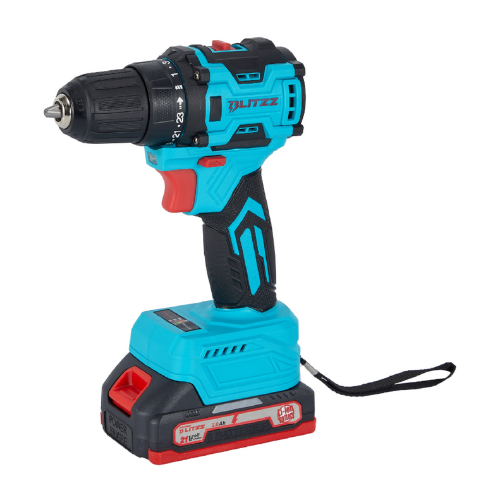
Cordless drills are battery-powered tools designed for mobility, convenience, and flexibility, making them ideal for remote or power-limited construction sites.
Key Features:
- Battery-powered operation
- High mobility and portability
- Ideal for fieldwork and installation jobs
- Quick setup and use
Cordless drills are widely used by technicians working in residential areas, roofing installations, and outdoor construction projects where electricity access is limited.
For professional-grade mobility tools, contractors often rely on cordless tools systems.
How Does Battery Life Affect Cordless Drill Performance in Uganda?
Battery life is a critical factor because Uganda’s high temperatures and limited charging access in remote sites can significantly reduce cordless drill efficiency and runtime.
Battery Challenges:
- Heat accelerates battery degradation
- Limited charging access on remote sites
- Reduced runtime under heavy load
- Long recharge cycles delay work
In regions like Karamoja and rural western Uganda, contractors often experience extended periods without reliable power access, making battery management essential for productivity.
Proper storage and rotation of batteries are necessary to maintain workflow continuity.
Corded vs Cordless Drill Comparison
Corded drills provide consistent power and higher torque, while cordless drills offer mobility and flexibility, making each suitable for different construction environments.
Comparison Table:
| Feature | Corded Drills | Cordless Drills |
|---|---|---|
| Power Source | Direct electricity | Rechargeable battery |
| Mobility | Limited | High |
| Torque Output | High and stable | Moderate to high |
| Runtime | Unlimited | Limited by battery life |
| Best Use Case | Workshops, heavy drilling | Fieldwork, installations |
Both tools are essential depending on the contractor’s operating environment.
Which Drill Is Better for Heavy-Duty Work?
Corded drills are generally better for heavy-duty work because they provide continuous power and higher torque without battery limitations.
Ideal Applications:
- Concrete drilling
- Metal fabrication
- Continuous workshop tasks
- High-volume construction work
Corded systems are often paired with industrial equipment such as air compressors for multi-tool workshop setups.
Which Drill Is Better for Field and Outdoor Work?
Cordless drills are better for field and outdoor work due to their portability, ease of use, and independence from fixed power sources.
Ideal Applications:
- Roofing installations
- Furniture assembly on-site
- Electrical fittings
- Remote construction work
Their flexibility makes them essential for mobile contractors operating across different sites daily.
What Technical Specifications Should Contractors Consider?
Key specifications include voltage, torque rating, RPM, battery capacity, and chuck size, all of which determine drill performance and suitability.
Drill Specification Table
| Specification | Corded Drills | Cordless Drills |
|---|---|---|
| Power Rating | 500 – 1200 W | 12V – 20V |
| Torque | High | Medium – High |
| RPM | 0 – 3000+ | 0 – 2000+ |
| Chuck Size | 10mm – 13mm | 10mm – 13mm |
| Battery | Not applicable | Li-ion rechargeable |
These specifications determine performance in different construction environments.
What Mistakes Do Contractors Make When Choosing Drills?
Common mistakes include selecting underpowered drills, ignoring jobsite conditions, and failing to consider battery availability or electricity reliability.
Critical Mistakes:
- Choosing low-voltage cordless drills for heavy work
- Ignoring battery backup needs
- Using corded drills in power-limited areas
- Overloading tools beyond capacity
These mistakes reduce productivity and increase tool failure rates.
How Does Uganda’s Work Environment Affect Drill Performance?
Dust, heat, and inconsistent electricity supply in Uganda significantly influence drill performance and durability, requiring careful tool selection and maintenance.
Environmental Challenges:
- Dust clogs motor ventilation
- Heat reduces battery efficiency
- Power fluctuations damage corded tools
In high-dust construction zones, regular cleaning using high pressure cleaning machines helps maintain tool performance.
How Much Do Corded and Cordless Drills Cost in Uganda (2026)?
Corded drills generally cost less than cordless drills, with prices ranging from UGX 150,000 to UGX 1,200,000 depending on power and quality.
Price Breakdown:
- Corded drills: UGX 150,000 – 600,000
- Cordless drills: UGX 300,000 – 1,200,000
Battery-powered systems cost more due to lithium-ion technology and charging systems.
Where Do Contractors Get Reliable Drills in Uganda?
Reliable drills should be sourced from trusted industrial suppliers that offer durable, high-performance tools designed for professional construction and installation work.
Contractors should prioritize:
- Durability under load
- Battery efficiency (for cordless models)
- Warranty support
- Spare part availability
Need Reliable Power Equipment?
Contact Jamali Tech for competitive pricing on industrial-grade generators, heavy-duty water pumps, and agricultural machinery.
- Email: info@jamalitech.com
- Phone: +256 742 264 753
- Office: Kampala, Uganda
- Hours: Mon - Fri: 8:00 AM – 6:00 PM
Ready to spec your equipment?
Tell us your job and we’ll come back with a sized quote, delivery window and warranty terms.